

Missing a tooth can affect much more than the appearance of your smile. Tooth loss can make eating and speaking more difficult, affect your bite, and contribute to changes in jawbone health over time. Fortunately, there are several ways to replace missing teeth, and dental implants are a top solution designed to provide a stable foundation for a replacement tooth or teeth.
But when should you consider dental implants over another solution?
The answer depends on how many teeth you're missing, the health of your remaining teeth and gums, your jawbone, and your personal goals. At Gaither Perio and Dental Implants, Dr. Gaither and his team provide customized implant treatment for patients in Murfreesboro and the surrounding communities, from single-tooth replacement to full-arch solutions.
What Are Dental Implants?
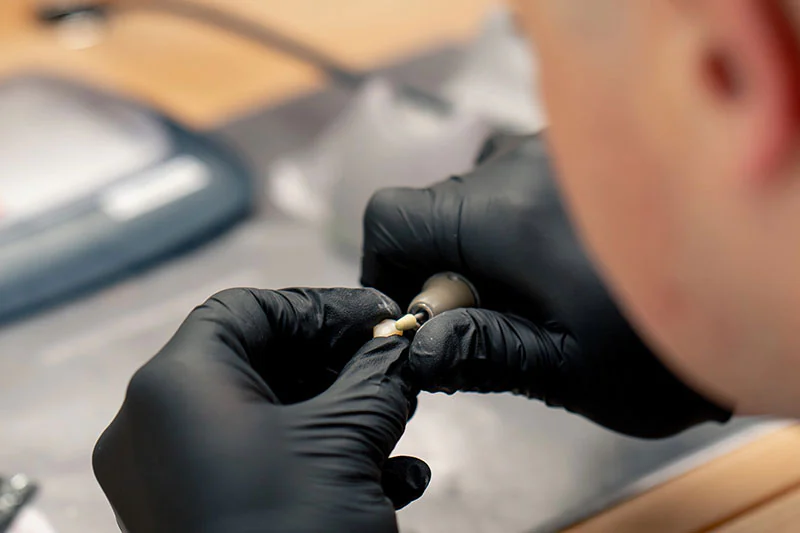 A dental implant is an artificial tooth root, typically made from biocompatible titanium, that is surgically placed into the jawbone. Over time, the implant can fuse with the surrounding bone through a process called osseointegration.
Once the implant has healed and integrated with the bone, it can support a replacement tooth or teeth. Depending on your needs, dental implants can be used to replace one missing tooth, several teeth, or an entire arch.
Because implants are anchored in the jawbone, they can provide stability for your replacement teeth while also helping maintain the bone surrounding the implant.
When Should You Consider a Dental Implant?
Dental implants may be worth considering if you're looking for a stable, long-term solution for missing teeth. They can be particularly appealing in several situations.
You're Missing a Single Tooth
If you've lost one tooth, a single dental implant can replace it without requiring the neighboring teeth to support the restoration.
A single implant is placed in the area of the missing tooth and eventually supports a custom dental crown. Because the implant functions as an artificial root, it can provide a stable foundation while helping preserve the bone in that area.
A single dental implant may be a good option if:
- You are missing one tooth
- The neighboring teeth are healthy
- You want a fixed replacement rather than a removable option
- You want to avoid preparing healthy adjacent teeth for a traditional bridge
- Your gums and jawbone can support an implant
Your dentist or periodontist will evaluate your individual circumstances before determining whether an implant is appropriate.
You're Missing Several Teeth
If you're missing multiple teeth, you may not need to replace every tooth with an individual implant. Depending on where the teeth are missing and your overall oral health, multiple implants can be used to support a larger restoration.
At Gaither Perio and Dental Implants, treatment options include implant-supported solutions for patients with more widespread tooth loss.
Implants may be particularly appealing if you want greater stability than a traditional removable restoration can provide.
You're Missing Most or All of Your Teeth
Patients who have lost most or all of their teeth have several implant-based options to consider.
Full mouth dental implants use multiple strategically placed implants to support a complete set of replacement teeth. This can provide a stable, functional alternative to traditional dentures for appropriate patients.
Another option is All-on-4® dental implants, which use four strategically positioned implants to support a full arch of replacement teeth. This approach can offer benefits such as improved stability and chewing ability, and in many cases may reduce the need for bone grafting.
The best full-arch approach depends on your anatomy, oral health, and treatment goals.
When Might Implant-Retained Dentures Be a Better Choice?
Dental implants don't always mean you need a permanently fixed set of replacement teeth.
Implant-retained dentures can be an option for patients who want the stability of dental implants while continuing to use a removable denture. These restorations are anchored to a small number of strategically placed implants, typically two to four.
Compared with traditional removable dentures, implant-retained dentures can provide greater retention and stability. They may also make chewing and speaking more comfortable and predictable.
This option may be worth considering if you:
- Are missing most or all of your teeth
- Want more stability than traditional dentures provide
- Prefer a removable restoration
- Want to improve chewing ability
- Are looking for an implant-supported alternative to conventional dentures
Your provider can help you compare implant-retained dentures with fixed full-arch options such as All-on-4® based on your needs and preferences.
When Might a Traditional Bridge or Denture Make More Sense?
Dental implants can be an excellent option, but they're not automatically the best choice for every patient.
A traditional dental bridge may be worth considering in some situations, particularly when a patient is missing one or several teeth and the neighboring teeth are appropriate to support a restoration.
Traditional dentures may also be a reasonable option for some patients who are missing multiple or all of their teeth, particularly if they prefer a removable solution or aren't currently a candidate for implant treatment.
Factors such as your oral health, bone structure, medical history, treatment preferences, timeline, and budget can all play a role in deciding which tooth-replacement option makes the most sense.
The goal isn't simply to choose the most advanced treatment available. It's to find a solution that is appropriate for your individual situation and can provide the function, comfort, and appearance you're looking for.
What If You Don't Have Enough Bone for an Implant?
Having insufficient jawbone for supporting a dental implant doesn't necessarily mean you cannot receive dental implants.
After a tooth is lost, the jawbone in that area can gradually deteriorate because it no longer receives stimulation from a natural tooth root. Some patients may therefore need additional treatment to improve the bone volume or quality before an implant can be placed.
Depending on your anatomy and treatment plan, procedures such as bone grafting may be recommended.
Interestingly, All-on-4® treatment can reduce or eliminate the need for bone grafting in many cases because implants are strategically positioned to take advantage of available bone. However, whether this approach is appropriate depends on your individual anatomy.
A comprehensive evaluation is the best way to determine what is possible.
Why Choose a Periodontist for Dental Implants?
Periodontists specialize in the health of the gums and supporting structures of the teeth, as well as dental implant treatment. This specialized training can be particularly valuable when implant treatment involves complex gum or bone considerations.
Dr. Gaither completed four years of specialized post-doctoral training in addition to dental school and has extensive experience with periodontal and implant therapy. At Gaither Perio and Dental Implants, this combination of periodontal and implant expertise allows the team to evaluate the health of the tissues supporting your future restoration as part of the overall treatment plan.
How Does 3D-Guided Implant Placement Work?
Successful implant treatment starts with careful planning. At Gaither Perio and Dental Implants, 3D-guided dental implant therapy allows Dr. Gaither to evaluate your jawbone and surrounding structures before implant placement.
Using 3D imaging and digital planning, the team can:
- Evaluate bone quality and volume
- Identify important anatomical structures
- Determine the ideal implant size and position
- Plan implant placement around your individual anatomy
- Create a customized surgical guide when appropriate
This detailed planning helps support precise implant placement and allows your treatment to be designed around both function and aesthetics.
Dental Implants Can Replace More Than a Missing Tooth
One of the biggest advantages of dental implants is their versatility. The same basic implant concept can be incorporated into different treatment plans depending on the extent of your tooth loss.
At Gaither Perio and Dental Implants, options include:
- Single dental implants for individual missing teeth
- Full mouth dental implants for patients with extensive tooth loss
- All-on-4® dental implants for full-arch replacement
- Implant-retained dentures for greater stability with a removable restoration
Your treatment plan may also include additional periodontal or restorative care depending on the condition of your smile.
Is It Time to Consider Dental Implants?
If you're missing one or more teeth, you don't have to simply accept changes to your ability to eat, speak, or smile. Dental implants can provide a stable foundation for replacing missing teeth and may be an option whether you've lost one tooth or an entire arch.
The first step is a comprehensive evaluation. Dr. Gaither can assess your gums, jawbone, remaining teeth, and overall oral health before discussing which tooth-replacement options may be appropriate.
At Gaither Perio and Dental Implants, our goal is to develop a personalized implant treatment plan based on your smile, never a one-size-fits-all solution.
If you're considering dental implants in Murfreesboro, TN, contact Gaither Perio and Dental Implants to schedule a consultation and discover if dental implants are right for you.


